
For those following a ketogenic One Meal a Day (OMAD) protocol, the timing, setting, and post-meal routine can significantly impact recovery, stress levels, HRV, and sleep. It’s not just what you eat — but when, where, and how you eat it.
This is especially true for individuals tracking biometrics like Garmin stress, HRV, sleep scores, and ketone levels. After fasting all day, your body is highly sensitive to post-meal signals — both metabolic and environmental. The difference between a good night’s recovery and a restless evening often comes down to simple controllables.
Let’s break it down.
Temperature vs. Food Intake
Your digestion, autonomic balance, and thermoregulation are all temperature-sensitive. Here’s how eating in different ambient temperatures affects your system:

Takeaway: Aim for 18–20 °C during and just after your meal — enough to feel alert but not chilly. Add a jumper if needed, but keep the environment cool and calm.
What To Do During the Meal
Focus on the food: Let your body switch into “fed” mode without multitasking.
Eat slowly: Chewing thoroughly and taking your time boosts vagal (rest-and-digest) tone. 15-25 Chews per mouthful.
Stay off screens: TV, emails, or social media stimulate mental activity, reducing digestion efficiency.
Don’t overheat: Warm food is fine, but don’t pair it with hot rooms or hot drinks. Stay in that 18–20 °C zone.
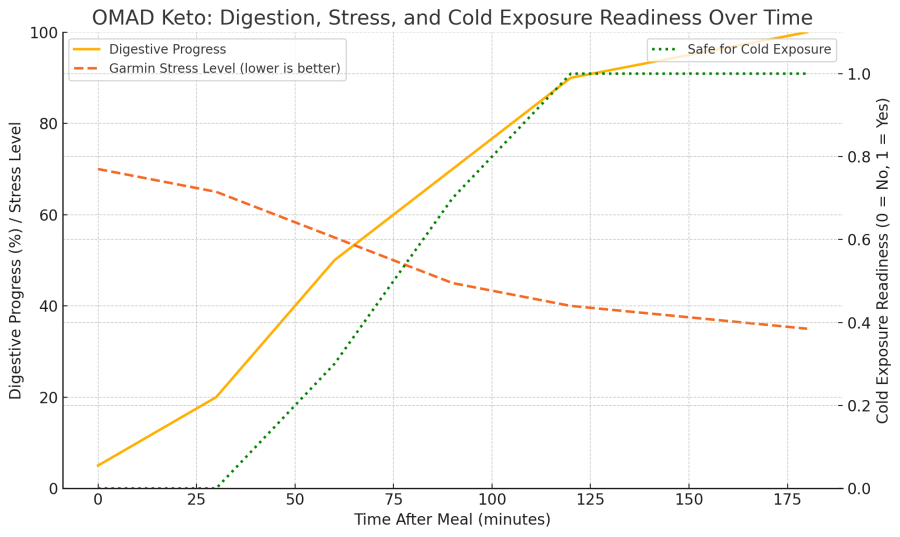
Post-Meal Digestion Timeline (in Cool-to-Optimal Conditions)
Knowing how long your body takes to process food can help you time cold exposure, sleep, or training without interrupting digestion.

What To Do After the Meal (And When)
• 0–30 mins: Stay seated or lightly upright. No brisk walks or cold exposure.
• 30–90 mins: Take a gentle walk outside (ideally in cool air). This improves glucose uptake and calms the nervous system.
• 90+ mins: Transition into a wind-down routine — cooler room, blue light blockers, herbal teas. Sleep prep begins here.
• 120+ mins: By this point, you’re clear to use saunas, do cold plunges, or train again if needed.
The best time to eat on OMAD keto isn’t just about the clock — it’s about the internal and external environment. You’re asking your body to perform a big physiological shift after a day of fasting. The more you support digestion with the right temp, pace, and post-meal care, the more your biometrics will thank you.
Slow, screen-free meals = better HRV and deeper sleep
Cool is king (18–20 °C is your Goldilocks zone)
Wait 90–120 mins before layering on cold therapy, sauna, or exercise