
When structuring your eating around OMAD, 16:8, or 20:4 protocols, the key to success lies not just in what you eat—but when and why you eat it. Your main meal, typically in the midday to early afternoon window (12:00–3:00 PM), is the foundation of your nutritional strategy. This is where you take in the bulk of your fuel: grass-fed meats, fatty fish, eggs, olive oil, avocado, and non-starchy vegetables. This isn’t just about calories—it’s about deeply nourishing the body with protein, healthy fats, minerals, and micronutrients. Bone broth or slow-cooked cuts can round out the meal, delivering collagen and glycine to support joint and gut health.

Before or during this main meal, it’s highly beneficial to include small servings of ferments or bitters. A forkful of sauerkraut, a splash of diluted apple cider vinegar, or a few drops of gentian or dandelion root tincture can prime the digestive system. These pre-digestive elements stimulate bile flow, digestive enzymes, and help prepare the gut to handle a higher-fat meal common in keto or OMAD patterns. In short, they make your food easier to process and absorb.
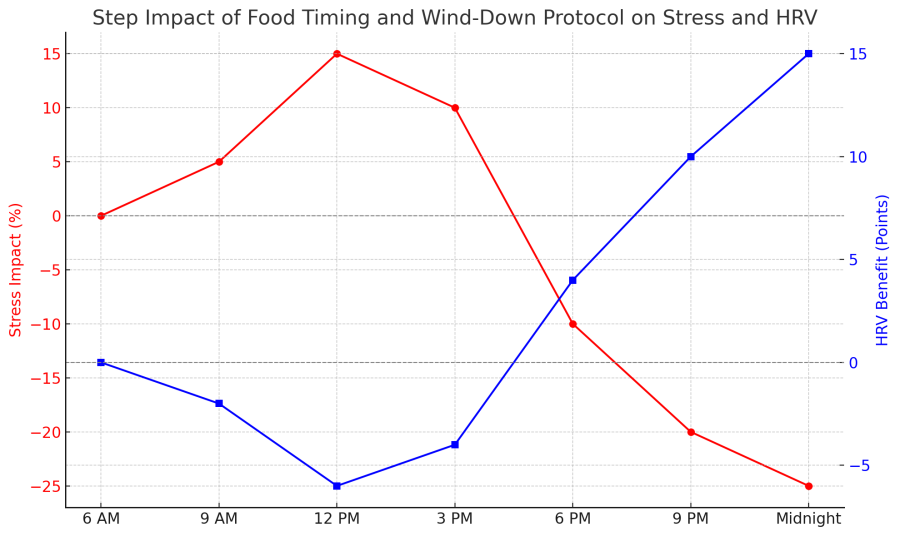
If your protocol or lifestyle includes a second light option in the evening, around 5:30–6:30 PM, keep it gentle. A half apple, some plain organic yogurt, or a refreshing shaved ice with vitamin C, lemon, and stevia satisfies the ritual of eating without taxing digestion. This helps ease the transition into rest without triggering a stress spike or interfering with HRV recovery.
Supporting this, a mineral-rich sip like bone broth or a magnesium drink between 6:00–7:00 PM helps with hydration and nervous system balance. The goal is simple: fuel smart early, wind down gently, and avoid anything after 6:30 PM that might undo your progress.